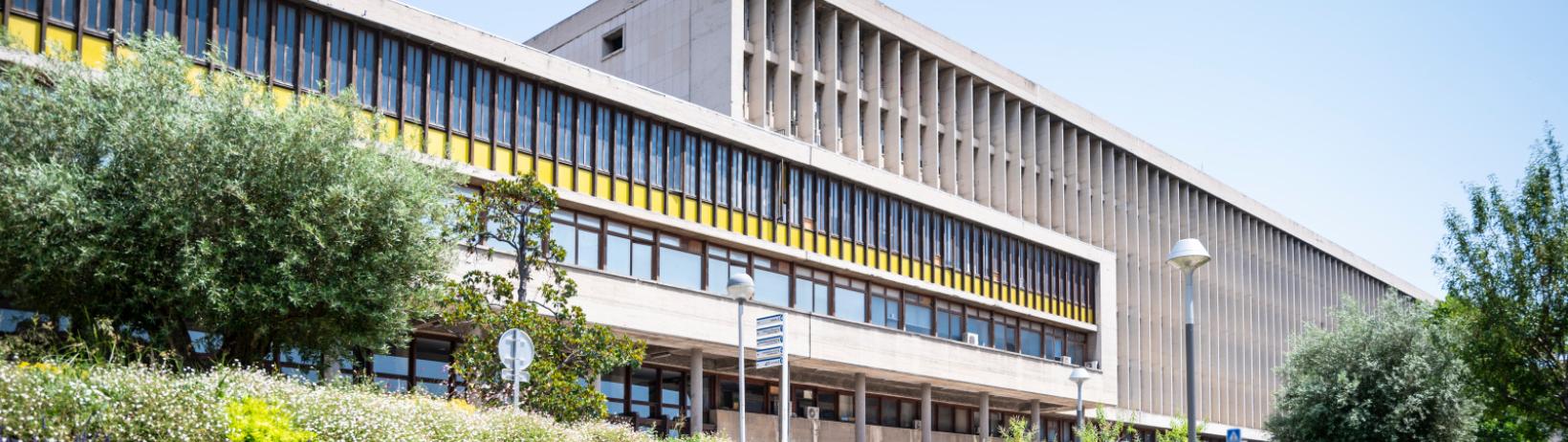
Governance of the ISSPAM institute is provided by several complementary bodies that monitor, implement and evaluate the institute’s missions and activities. The institute’s executive office implements and coordinates the initiatives and missions of the ISSPAM institute.
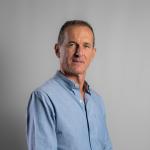
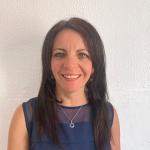
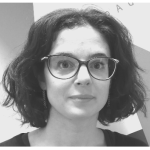
Meet our executive office
The office is responsible for the operational management of the institute. It leads the teams and coordinates governance, in conjunction with the partner laboratories, components and doctoral schools. The office meets on a weekly basis.
Our other strategic and operational monitoring bodies
The steering committee contributes to and oversees the smooth running of the projects set up within ISSPAM. It meets on a monthly basis.
This steering committee, in addition to the Institute Director, Deputy Research Director and Deputy Training Director, is made up of ISSPAM members:
- Pascal Auquier (CEReSS)
- Jean-Charles Dufour (SESSTIM)
- Jean Gaudart (SESSTIM)
- Brigitte Juanals (CNE)
- Romain Lutaud (ADES)
- Julien Mancini (SESSTIM)
- Noémie Resseguier (CEReSS)
- Léa Restivo (LPS)
- Perrine Roux (SESSTIM)
- Luis Sagaon-Teyssier (SESSTIM)
- Marc Souville (LPS)
- Barthélémy Tosello (ADES)
- Raquel Ureña Perez (SESSTIM)
The Advisory Board is an important strategic committee. It is made up of representatives of the supervisory bodies of the research units and institutions to which the faculties and schools are affiliated, and meets annually.
To this end, the steering committee:
- Appoints the Director of the Institute on the recommendation of the Institute Council;
- Approves the roadmap and its annual update;
- Issues an opinion and recommendations on whether the roadmap matches the budget;
- Validates investments for year n+1.
ISSPAM is supervised by:
The Institute Council approves the broad guidelines for the institute’s education and research strategy, budget and governance. Chaired by the Director of the Institute, the Institute Council meets at least twice a year.
The Institute Council is made up of members in an advisory capacity and members entitled to vote.
Members in an advisory capacity:
- Director (RST)
- PACA Regional Health Agency
- Deputy Research Director
- PACA Regional Health Observatory
- Deputy Training Director
- Managing Director, IPC
- Project manager
- Programme Manager, ISSPAM
- Director of the Doctoral College
- Student representative
- Directors of Doctoral Schools ED 659, ED 356
- Patient representatives, patient associations
- Representative of the French Public Health Doctoral Network
Members entitled to vote:
- College 1 (University faculties):
- UFR of medical and paramedical sciences (Dean)
- UFR of arts, letters, languages and humanities (Dean)
- College 2 (Laboratories):
- Health economics and social sciences and medical information processing (Director)
- Centre for study and research on health services and quality of life (Director)
- BBio-cultural anthropology, law, ethics and health (Director)
- Laboratory for Social Psychology (LPS)
- Norbert Elias centre (Director)
In compliance with the practices of international research universities, the institute has a Scientific & Training Advisory Board (STAB) made up of 6 national and international members, with gender parity, who are external to the University and who are tasked with supporting the scientific and educational trajectory of the institute and of shedding light on its national, European and international positioning.
The STAB is appointed by the Institute Council on the recommendation of the Executive Committee for a 3-year term (renewable once).
Its chief missions are to:
- Meet (physically and/or by videoconference) once a year to evaluate the institute’s research and training activities;
- Draft an opinion on the institute’s activities (training and research), which will be submitted to the Institute Council.
The six members of the ISSPAM STAB are:
- Anita Burgun, Institut Pierre Louis d'Epidémiologie et de Santé Publique, Social Epidemiology Research Team;
- Moïse Desvarieux, Department of Epidemiology, Columbia University Mailman School of Public Health/University of Paris, CRESS, INSERM, INRA;
- Maria MELCHIOR, Institut Pierre Louis d'Epidémiologie et de Santé Publique, Social Epidemiology Research Team;
- Marie Preau, Université Lumière Lyon 2, Inserm multidisciplinary Joint Research Unit (Unité Mixte de Recherche) 1296 Radiation;
- Valery Ridde, Centre Population et Développement;
- Rodolphe Thiebaut, Bordeaux Population Health, Statistics for translational medicine.
Find out more about the institute
About us
Aims of the institute, presentation videos, geographical sites